
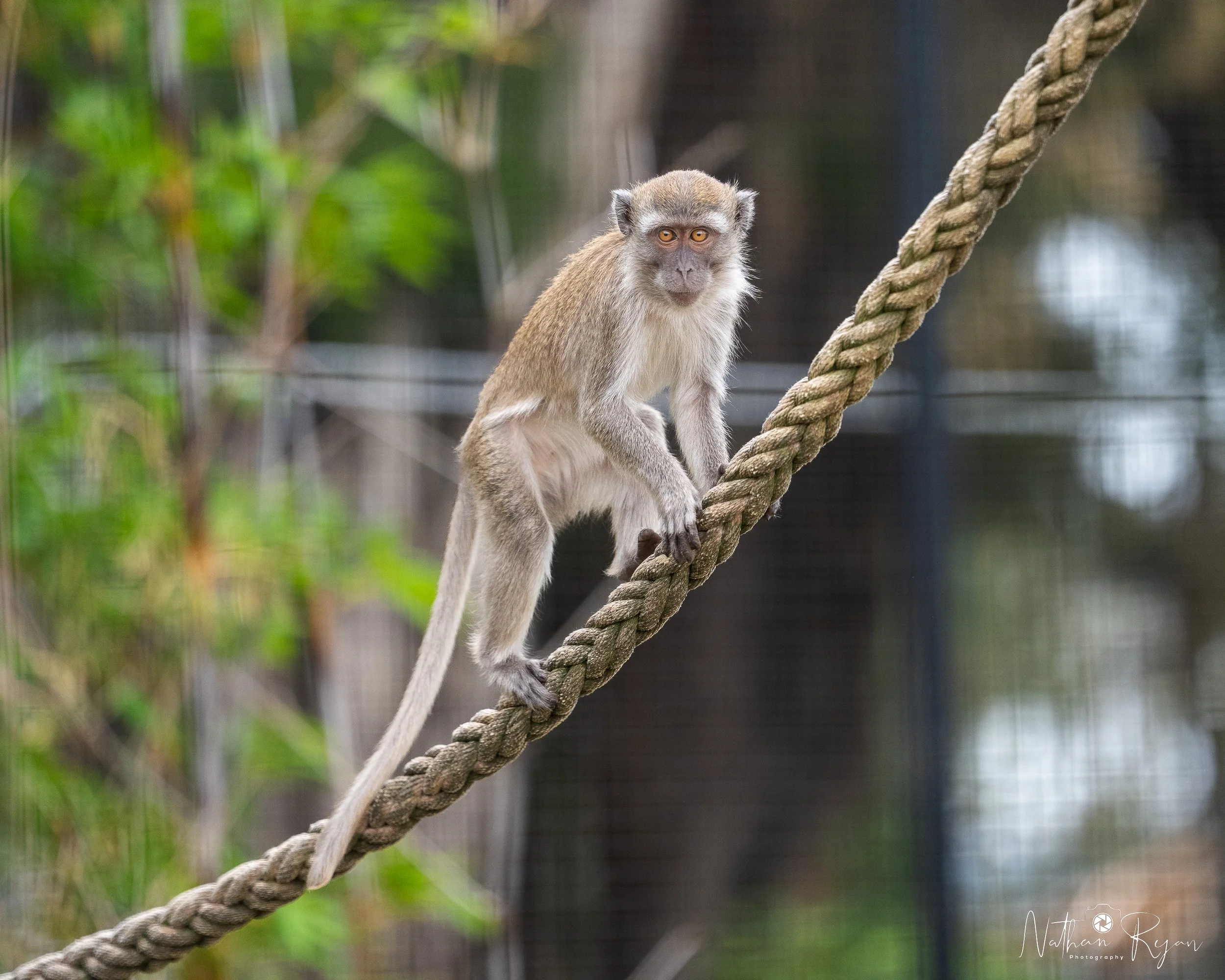
Long‑Tailed Macaques
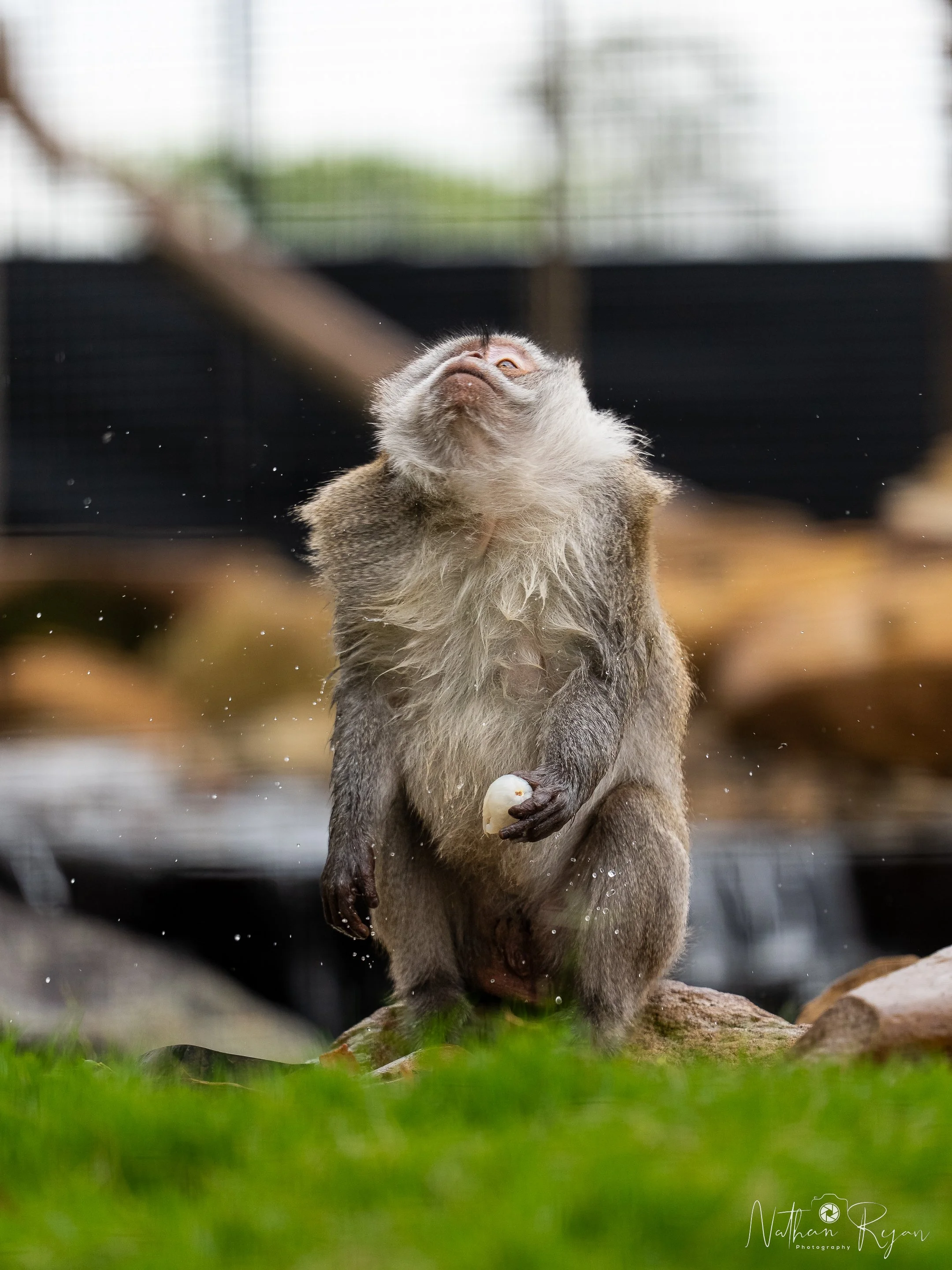
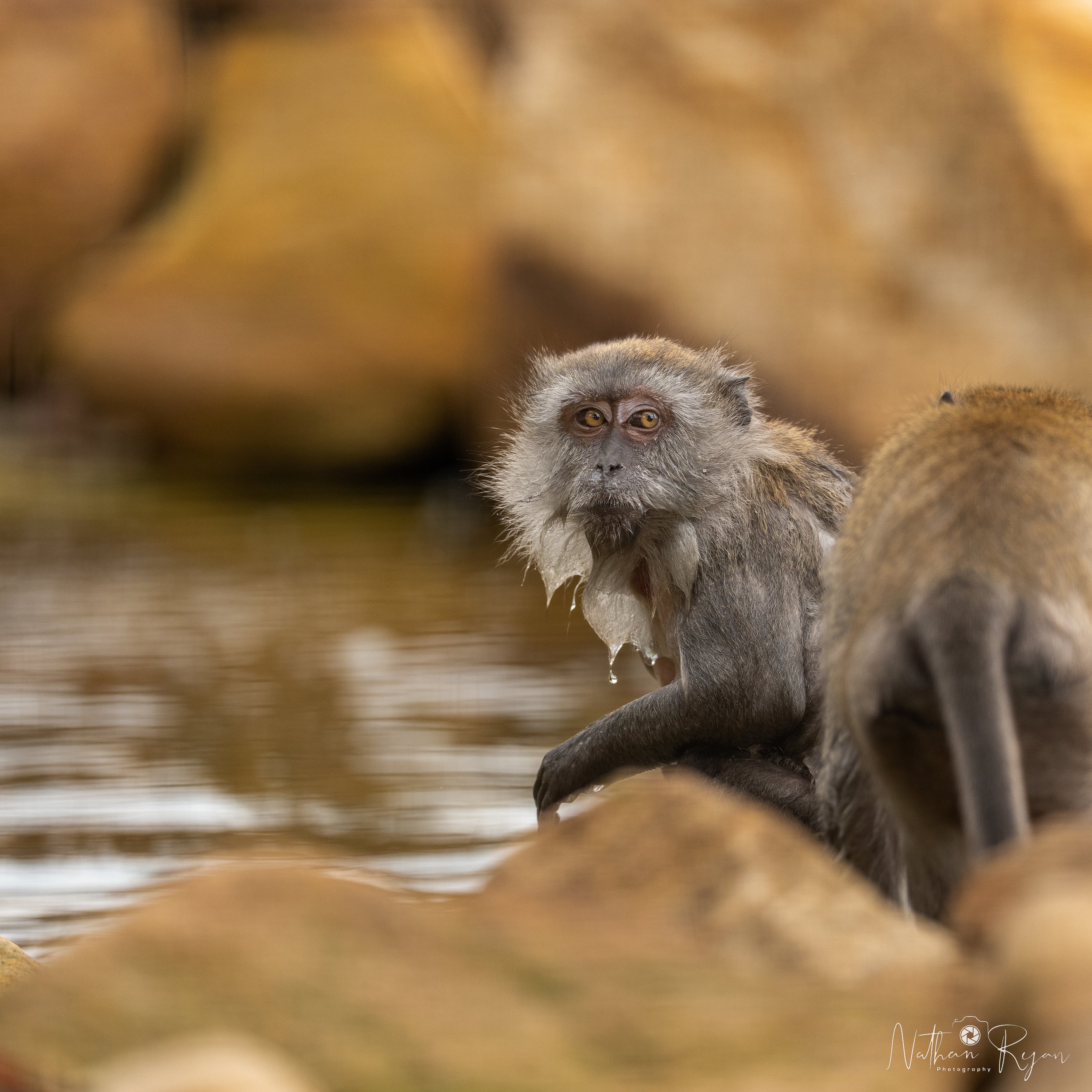
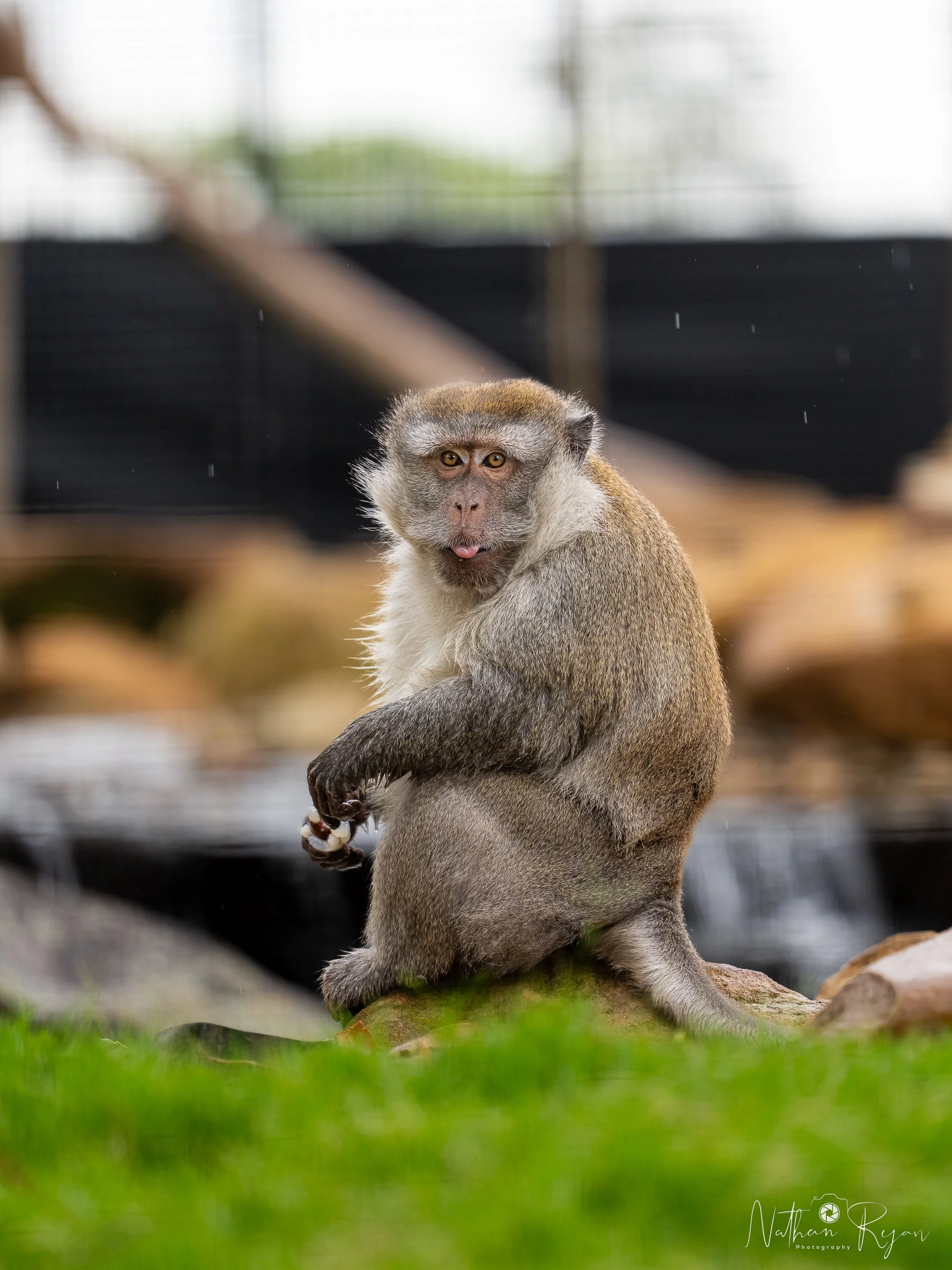
The crab-eating macaque, also known as the long-tailed macaque, is a primate native to Southeast Asia. It has a long history alongside humans; they have been alternately seen as agricultural pests, sacred animals in some temples, and more recently, the subject of medical experiments.
The significant overlap in macaque and human living space has resulted in greater habitat loss and has seen the species become classified as endangered.
About the Species
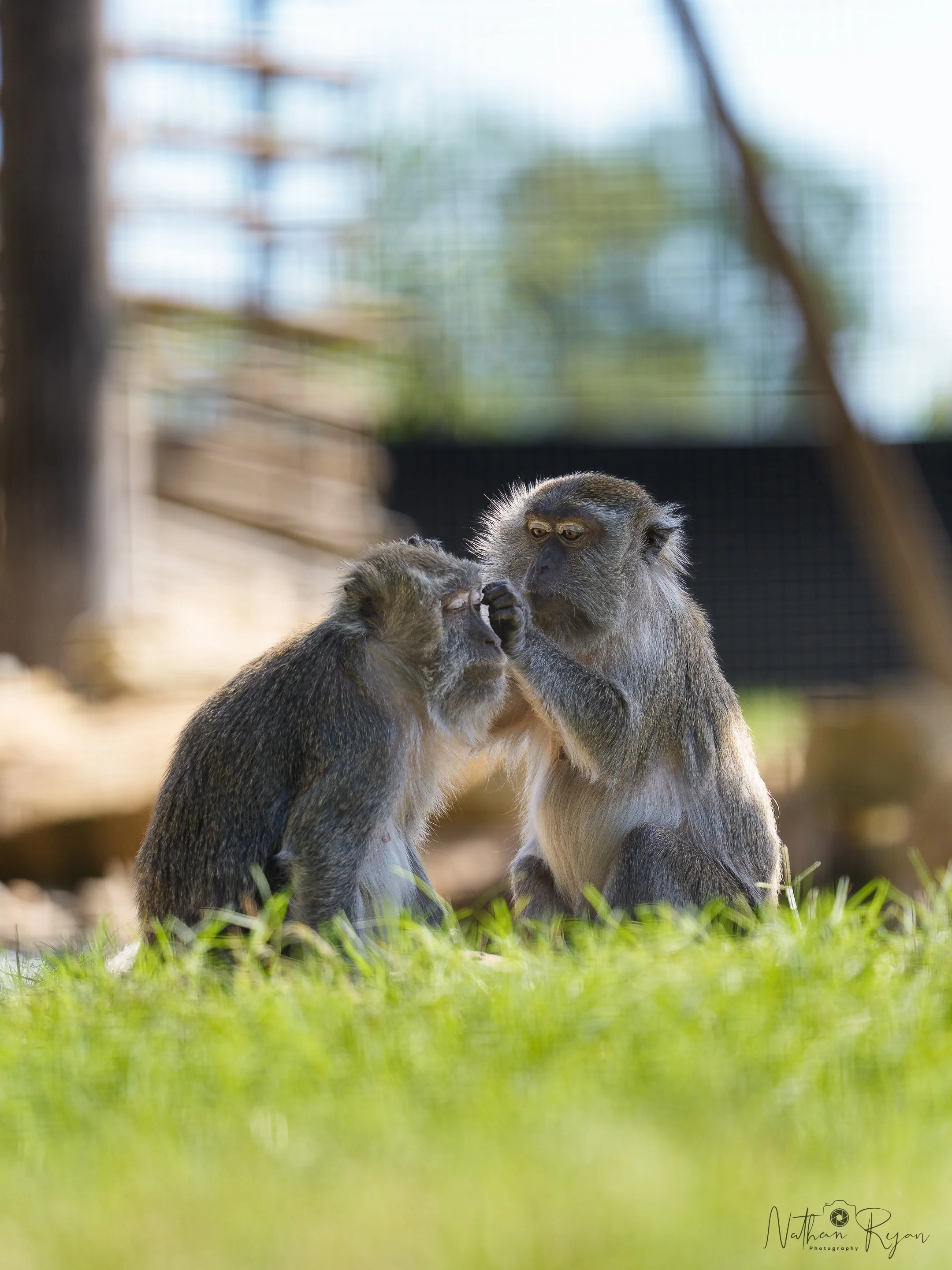
Macaques live in social groups that contain three to 20 females, their offspring, and one or a few males. In social groups of macaques, a clear dominance hierarchy is seen among females. These ranks remain stable throughout the female’s lifetime and also can be sustained through generations of matrilines.
Females have their highest birth rates around 10 years of age and completely stop bearing young by age 24. Gestation is 165 days giving birth to a single baby.
The social groups of macaques are female-bonded, meaning the males will disperse at the time of puberty
Our Long‑Tailed Macaques live at our sanctuary near Sydney, where ethical primate care supports their complex social needs
Social Structure & Behaviour
In Thailand and Myanmar, crab-eating macaques use stone tools to open nuts, oysters, and other bivalves, and various types of sea snails.
Another instance of tool use is washing and rubbing foods such as sweet potatoes, cassava roots, and papaya leaves before consumption. Crab-eating macaques either soak these foods in water or rub them through their hands as if to clean them. They also peel the sweet potatoes, using their incisors and canine teeth. Adolescents appear to acquire these behaviors by observational learning of older individuals.
In Indonesia, the species has become a proficient swimmer and diver for crabs and other crustaceans in mangrove swamps.
Tool Use
Long‑tailed macaques are currently listed as ENDANGERED due to habitat loss, human‑wildlife conflict, and exploitation in the illegal wildlife trade. Their adaptability has helped them survive in changing environments, but they still face significant threats across their native range.
By caring for macaques at ZAMBI, we help raise awareness about their conservation needs and the importance of protecting primate habitats worldwide.
Conservation Status
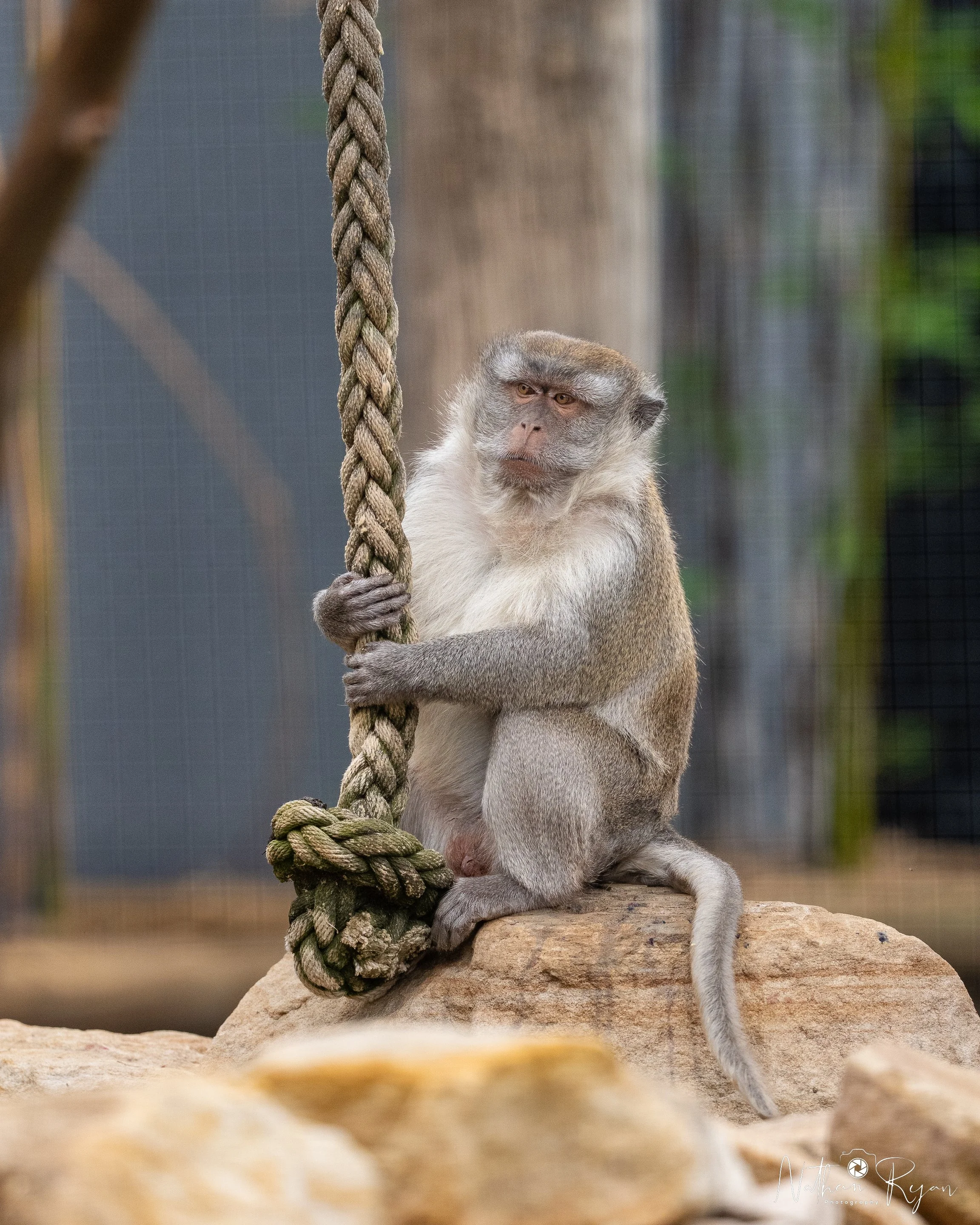
Meet the Macaques on a Guided Tour
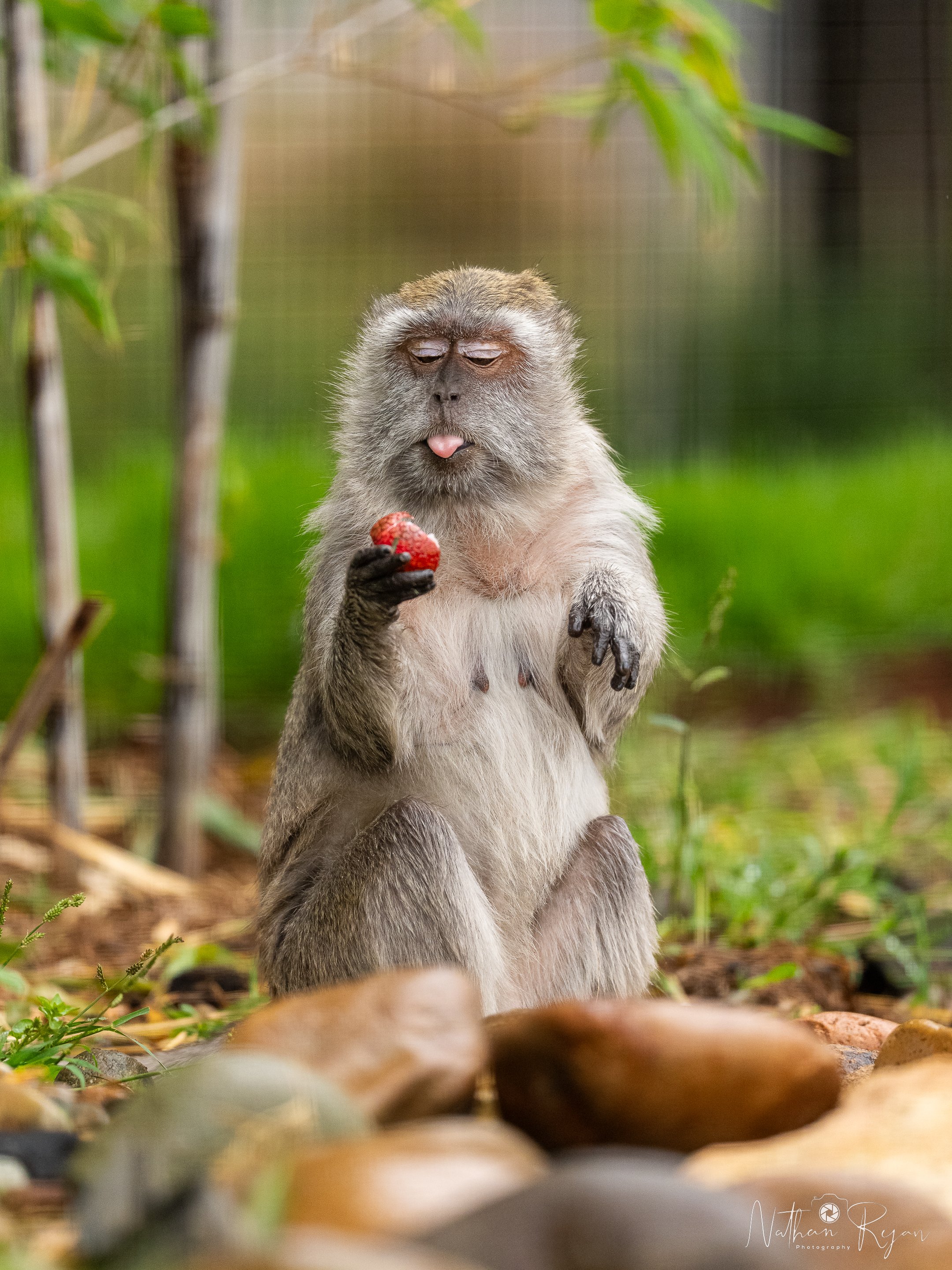
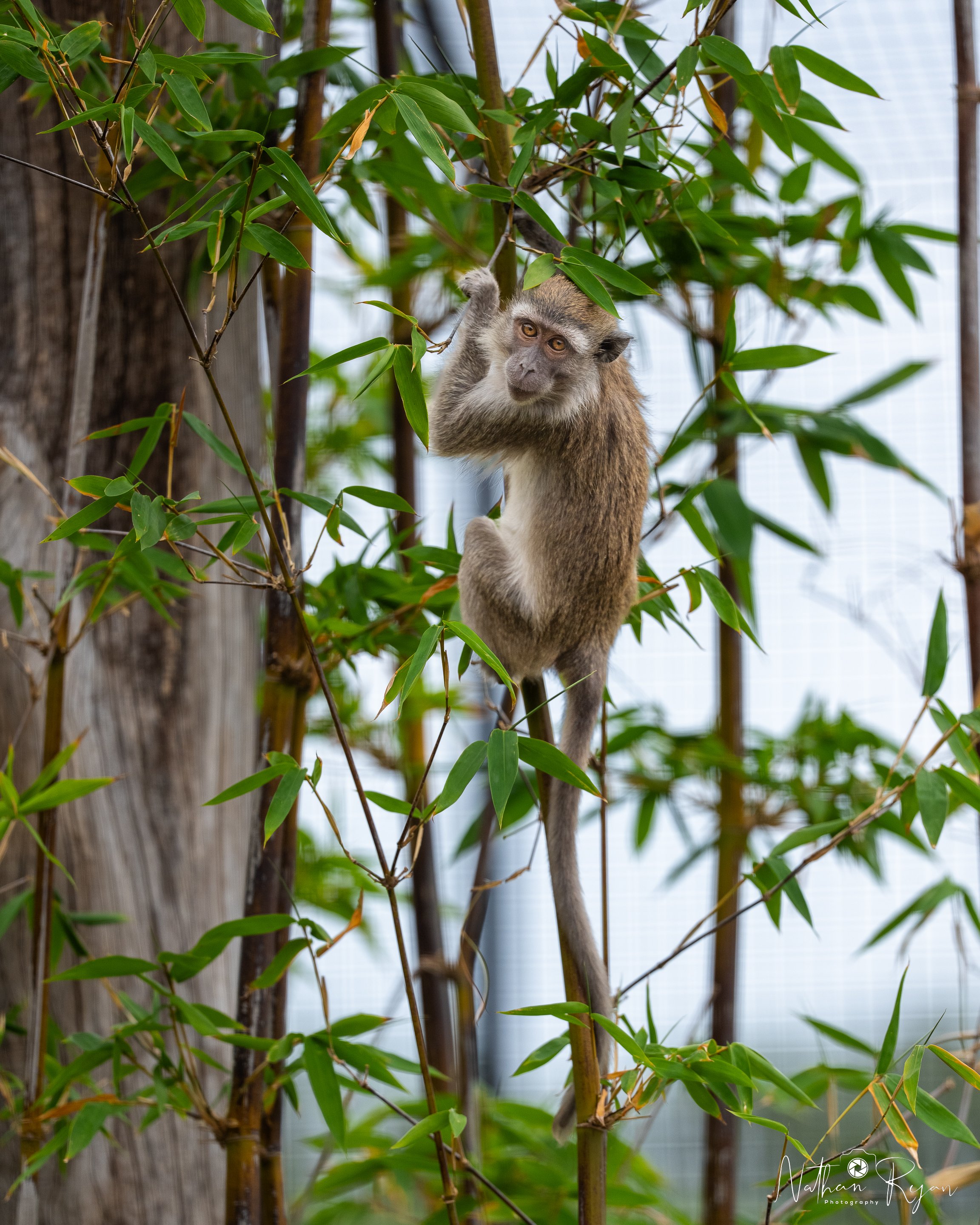
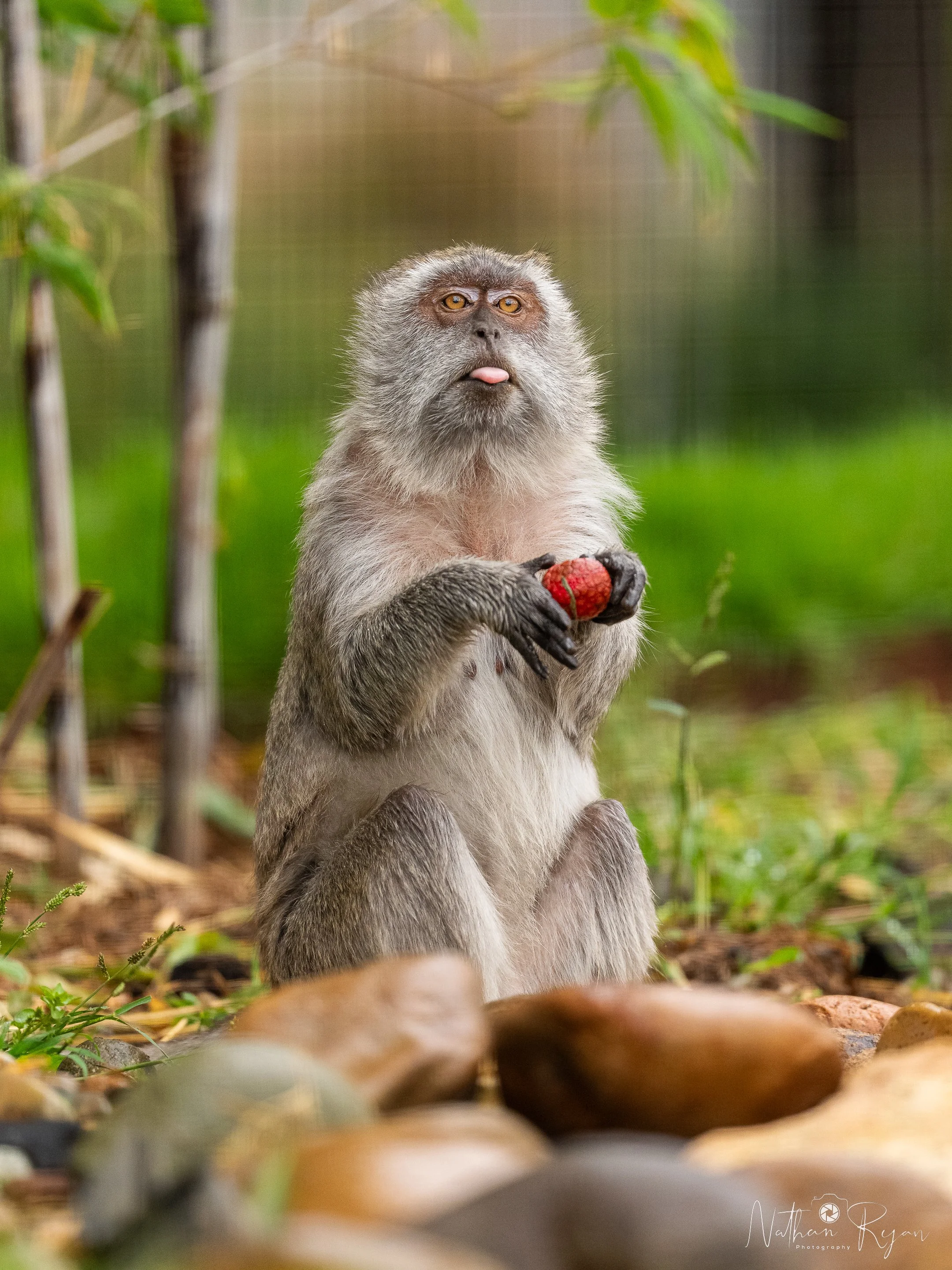
The long‑tailed macaques are part of the tour during your ZAMBI Experience, and guests have the opportunity to feed them while learning about their behaviour, intelligence, and social dynamics. All interactions are guided by our keepers and designed with the macaques’ welfare as the highest priority.
Sightings and feeding opportunities depend on the troop’s behaviour and comfort on the day.
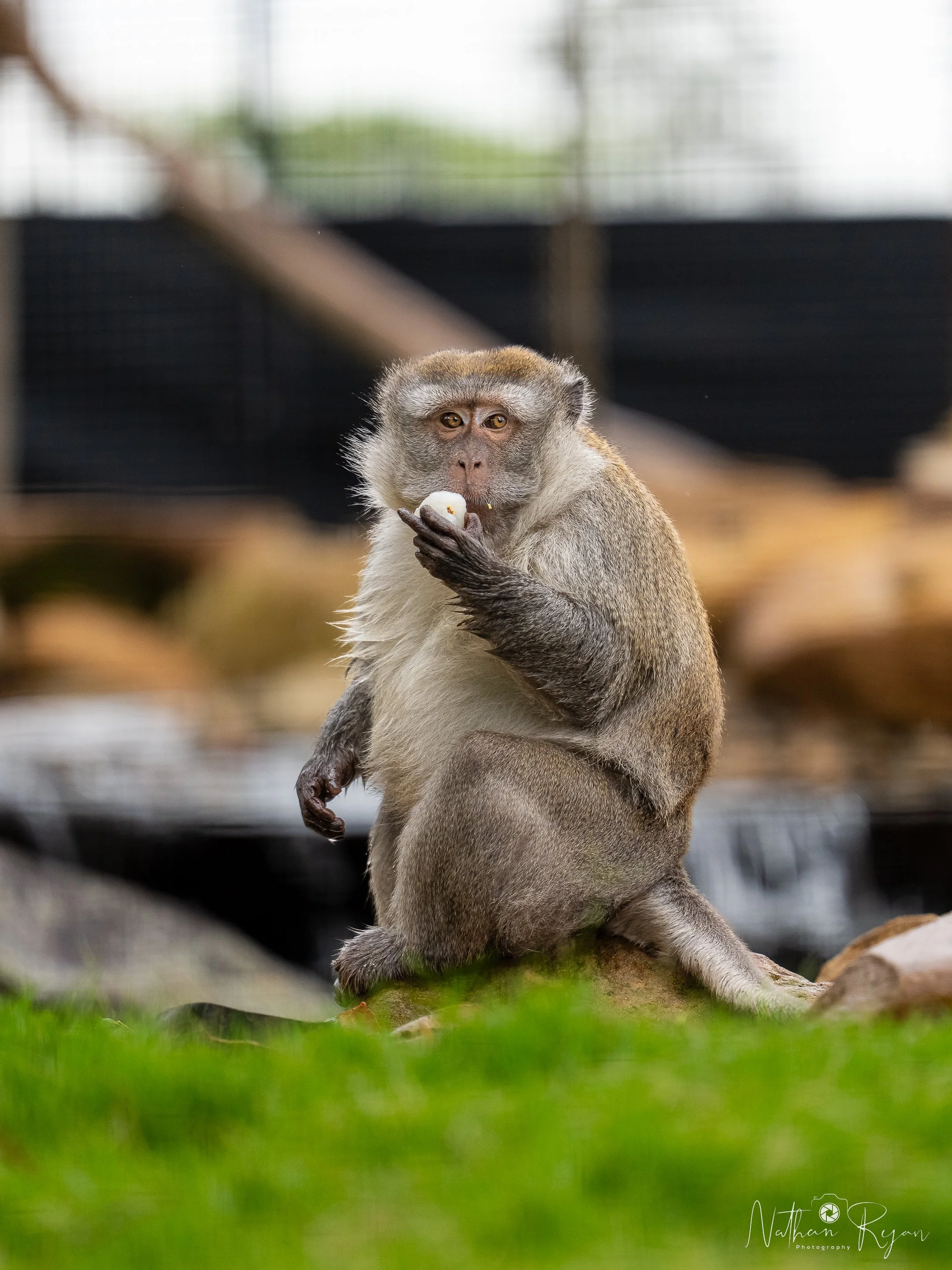
Support Primate Conservation
Support the Animals in Our Care
If you’d prefer to give directly, your donation helps provide food, enrichment, and veterinary care for the animals in our care.
Book Your ZAMBI Experience
Select your preferred date to check availability and request your visit.
We are not open to the public for general admission. All visits must be pre‑booked.
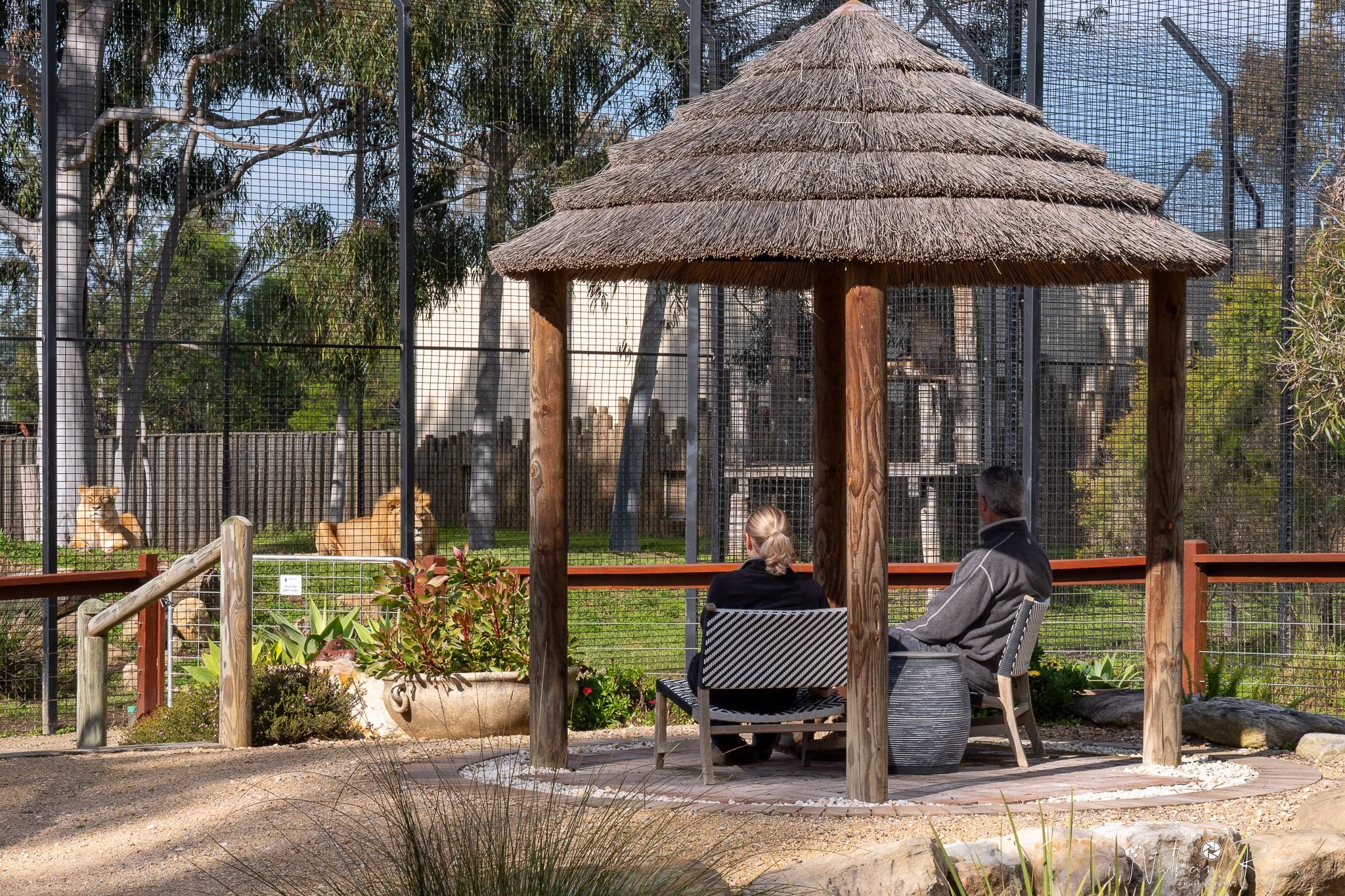
Gift the Experience of a Lifetime at ZAMBI Wildlife Retreat!
Treat your loved ones to an unforgettable day where they can get up close and personal with some of the world’s most fascinating animals. From guided tours to exclusive animal encounters, ZAMBI Wildlife Retreat offers a unique opportunity to connect with nature and create lasting memories. Perfect for ANIMAL LOVERS and THRILL SEEKERS alike, a ZAMBI gift certificate promises to be the greatest gift.